Welcome to America Comes Alive!, a site I created to share little-known stories of regular people who made a difference and changed the course of history. Look around and see what inspires you! — Kate Kelly
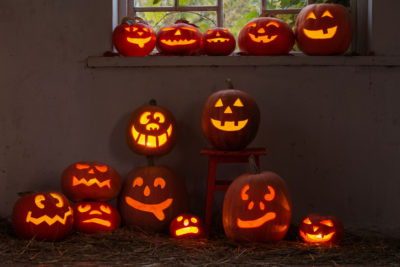
Halloween pranks and mischief-making have been a part of Halloween in America for at least 150 years. When the Irish and the Scottish immigrants came to North America, they brought with them their Hallow’s Eve traditions. The Celtic festival that marked the end of the harvest season was thought to bring with it both good and evil spirits. By the late 1800s, young people in the U.S. interpreted this as a time to create mischief…
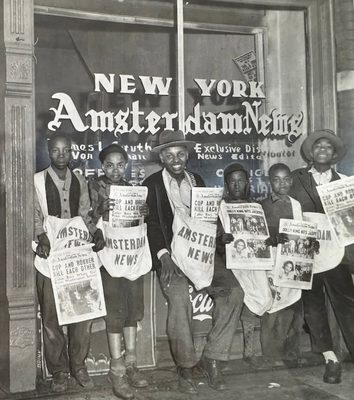
The New York Amsterdam News was founded in Manhattan in 1909 by James H. Anderson. From Anderson’s humble beginnings and his $10 investment, the newspaper grew to be one of the most influential Black-owned newspapers in the United States. Anderson’s original intent was to create a weekly community paper highlighting local news, including weddings, social news and information about the neighborhood. Its location in the heart of a Black community in Manhattan soon led Anderson…
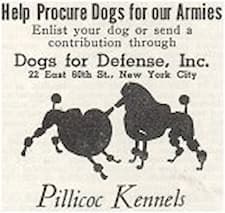
When World War II began, the United States military had no plan for using dogs for defense. This was in spite of the example set by European countries that employed trained military dogs to great effect during World War I. The American wake-up call for better defense measures came on December 7, 1941, with the attack on Pearl Harbor. Both military leadership and an anxious public realized the country was woefully under-prepared. The nation was…
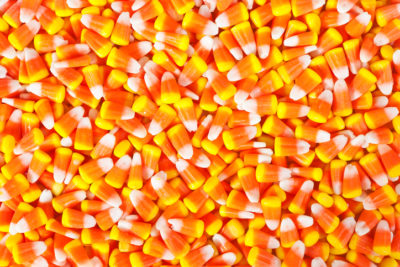
Candy corn is to Halloween what the candy cane is to Christmas. We may not dream of eating either of them, but each is the iconic candy for its holiday. For candy corn, that’s a David-vs-Goliath accomplishment. Kit Kats, M & Ms, peanut butter cups, Hershey bars, Hershey kisses, licorice, or Snickers, all could have come out on top. Instead, the lowly, bite-size bits of orange and yellow candy have long been the October holiday…
On October 27, 1873, Joseph Glidden, a farmer in Illinois, applied for a patent on a clever new design for a fencing wire with sharp barbs. Glidden’s was not the first barbed fencing wire, but his design was better. The design was also well-suited for mass production, and Glidden’s wire soon became the most popular wire in the nation. Barbed wire was an an invention that forever changed the face of the American West.
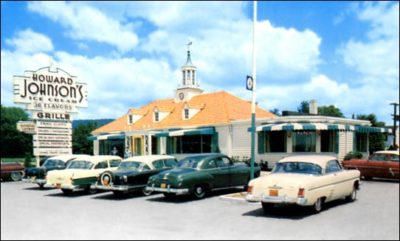
Restaurateur Howard Johnson made a name for himself by building a chain of roadside restaurants and motor lodges throughout the country. Johnson emphasized quality control and a consistently good experience […]
n 1908, women participated in a political convention for the first time. The convention itself was for the Democratic Party, and it was to be held in Denver, Colorado, in […]
In today’s world, major national political conventions in the United States are subject to the highest levels of security. The federal government oversees everything from the obvious site inspections and […]
Flag Day was proclaimed to be June 14 by President Woodrow Wilson in 1916. The date was chosen to commemorate that on June14, 1777, a flag with stars and stripes was selected […]
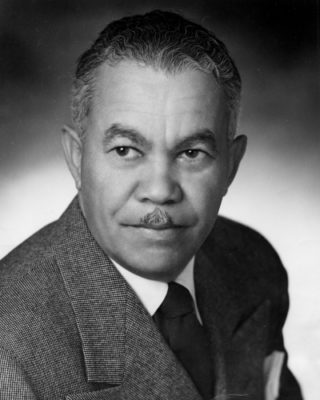
Paul Revere Williams (1894-1980) was a talented and dedicated man who overcame obstacles that would have daunted almost anyone else. He dreamed of designing buildings and went on to become […]
Why is Election Day always on a Tuesday? This is a question I am often asked when I address groups about our election day history. In 1845, Congress chose the […]
Skip the noise and get compelling stories about America delivered to your inbox. Mailings arrive about every other week.
Welcome to America Comes Alive!, a site I created to share little-known stories of regular people who made a difference and changed the course of history. Look around and see what inspires you! — Kate Kelly
Benjamin Banneker (1731-1806), a free Black man and a contemporary of the Founding Fathers, was an interdisciplinary pioneer who taught himself about various forms of science, astronomy, and geographical surveying. […]
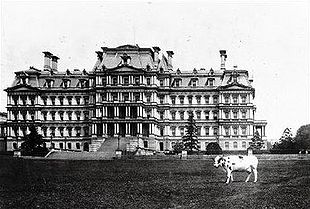
In 1909, long before pasteurized milk was standard in Washington, D.C., First Lady Helen “Nellie” Taft entered the White House with a personal goal. There were few dairies near the […]
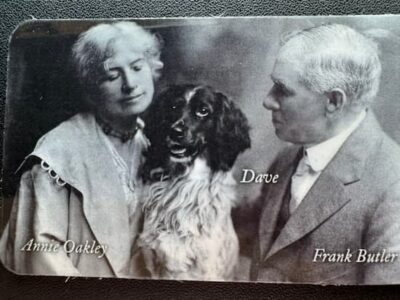
Long before modern celebrity pets, there was Dave the Wonder Dog—the famous English Setter who shared the spotlight with legendary sharpshooter Annie Oakley and her husband, Frank Butler. Nearly as […]
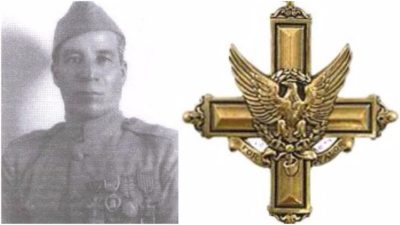
Marcelino Serna was still a Mexican citizen when he fought for the United States in World War I. He was smart at battlefield tactics, felt loyal to his fellow soldiers, […]
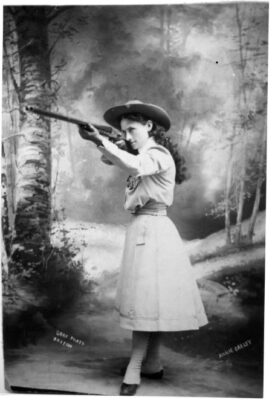
Before she became a global superstar, Annie Oakley was simply Phoebe Ann Mosey, a young girl relying on her remarkable ability with firearms to support her family by hunting. That […]
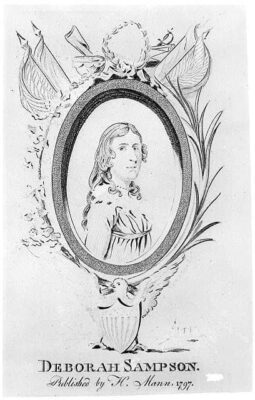
Deborah Sampson (1760-1827) is well-remembered for her actions during the Revolutionary War. She decided it was her calling to serve in the Continental Army, so she disguised herself as a […]
Part of the inspiration for this site comes from this remark: “People do not want to hear about simple things. They want to hear about great things – simply told.”